

Benefits of Jeevamrut in Sustainable Agriculture Publish Date : 22/12/2025

Benefits of Jeevamrut in Sustainable Agriculture
Professor R. S. Sangar and Dr. Reshu Chaudhary
Jeevamrut: For a A Natural and Sustainable Solution for Healthy Farming-
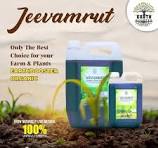
Jeevamrut is a natural liquid fertilizer made from cow dung, cow urine, jaggery, gram flour, and soil. Rich in beneficial microbes and nutrients, it boosts soil health, reduces chemical use, cuts farming costs, and promotes sustainable, eco-friendly, and also in healthier crop growth.
Modern farming often struggles with a dependence on costly chemical fertilizers that damage soil health in the long run. Farmers across India have been looking for alternatives that can provide nourishment to their crops while keeping the soil fertile for future generations.
One of the such solution, which has gained immense popularity, is Jeevamrut, a simple yet powerful bio-fertilizer. The word itself means "nectar of life," and rightly so, because it breathes life into the soil by enriching it with microorganisms and organic nutrients.
Jeevamrut is not a commercial product that needs to be bought; instead, it is something farmers can easily prepare on their own using resources that are often already available in their homes and farms. This makes it a farmer-friendly and cost-effective practice that perfectly suits the principles of natural and organic farming.
Ingredients Required for Making Jeevamrut
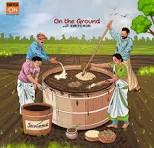
To prepare Jeevamrut, the most important ingredients are cow dung and cow urine, preferably from Indigenous cows, as they are rich in beneficial microbes. About ten kilograms of cow dung and eight to ten liters of cow urine form the base. To this mixture, farmers add one to two kilograms of jaggery, which acts as a source of food for microorganisms, and one to two kilograms of gram flour, which boosts microbial activity and provides additional nutrients. Around 180 liters of water is added to dilute the mixture, and finally, about one kilogram of soil from under a tree is mixed in to introduce natural soil microbes into the solution. All these materials are stirred together in a plastic drum or earthen pot, and thus, a natural liquid fertilizer begins to take shape.
Method of Preparation of Jeevamrut

The process of making Jeevamrut is as simple as its ingredients. Once the mixture is prepared, it is allowed to ferment for two days in a shaded area. Farmers are advised to stir the solution twice daily, in the morning and evening, to ensure proper mixing and aeration. The fermentation time varies with the seasons. In summer, Jeevamrut is ready within seven days, while in winter it may take eight to fifteen days for full fermentation. The end product is a nutrient-rich, microbe-loaded liquid that can be applied to the fields.
Method of Application in Farming
Jeevamrut can be used in two ways: as a soil drench or as a foliar spray. When applied to the soil, it acts as a tonic for microorganisms, which in turn make the nutrients available to the plants. When sprayed on the leaves, it helps in faster absorption of nutrients. Farmers usually apply Jeevamrut once every fifteen days to maintain soil fertility and boost crop growth. Its impact is visible in the form of healthy plants, better root development, and increased resistance to pests and diseases. Unlike chemical fertilizers that often leave harmful residues, Jeevamrut improves the soil’s organic matter and enhances its long-term productivity.

Writer: Professor R. S. Sengar, Director Training and Placement, Sardar Vallabhbhai Patel University of Agriculture and Technology, Modipuram, Meerut.


