

Rural Women Entrepreneurs The Foundation of 'Aatmanirbhar Bharat' Publish Date : 06/03/2026

Rural Women Entrepreneurs The Foundation of 'Aatmanirbhar Bharat'
Professor R. S. Sengar
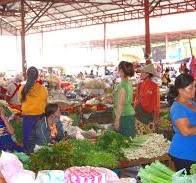
Rural women entrepreneurs are the cornerstone of Aatmanirbhar Bharat, driving socio-economic progress through sustainable innovation. By leading climate-resilient initiatives like community seed banks, organic farming, and cottage industries, they preserve biodiversity and ensure food sovereignty. Government-backed Self-Help Groups (SHGs) and the National Rural Livelihoods Mission (NRLM) have empowered millions, transforming regions like Kalahandi into hubs of prosperity. Their leadership in the green economy and digital inclusion is essential for India's transition into a developed nation by 2047.
Over the past decades, the role of small industries in accelerating economic development has been widely recognised. International institutions such as the World Bank, the International Monetary Fund, and the Global Entrepreneurship Monitor are consistently striving to promote entrepreneurship in emerging global economies. The Government of India is creating astrong framework through budget provisions, policy formulation, and constructive reforms, ensuring that the path of entrepreneurship becomes easier and accessible across all levels and regions of the country.
Since more than 60 per cent of India's population still resides in rural areas, the Government of India aims to reach every such region where the true essence of development can be established. It is noteworthy that women's empowerment has been at the core of India'spolicy-making, India can realise its dream of becoming a developed nation only with the participation of half the population.
The expansion of women's entrepreneurship facilitates socio-economic progress and also encourages innovation, creativity, and economic dynamism. Naturally, this makes a positive impact on the country's overall economic landscape.
Across India, women have traditionally sustained the unique heritage of transforming soil, water, and household energy into valuable resources. Many women-led enterprises work in green sectors such as organic farming, decentralised waste management, eco-friendly tourism or ecotourism, and clean energy. These enterprises are usually deeply rooted in their communities and often preserve and promote traditional ecological sustainability.
In many states of India, the work of women as seed savers is deeply embedded in the ethos of agroecology. Agroecological farming depends on diverse cropping systems, open-pollinated seeds, and local ecological knowledge-areas where women are key innovators. In Telangana, Dalit women farmers have established more than 80 community-managed seed banks, preserving over 80 varieties of millets, pulses, and vegetables. These seed banks safeguard food sovereignty. Through their 'community media trust', these women document their work, celebrate seed festivals, and educate others about agricultural practices.
Women-led seed-saving movements in Chhattisgarh and Odisha are reviving traditional varieties of rice, brinjal, and millets that are drought-resistant, pest-tolerant, and nutritionally rich-traits that are becoming increasingly crucial in an era of climate change and soil degradation. By prioritising biodiversity over uniformity, these women are building resilient seed systems.
In Odisha, Chhattisgarh, and Telangana, women-led seed banks have played a crucial role in preserving climate-resilient crop varieties-those capable of withstanding climate-induced stresses such as drought, floods, extreme temperatures, and pest-disease outbreaks. These include flood-resistant rice, drought-tolerant millets, and pest-resistant pulses. Institutions such as Navdanya have documented how women-led seed networks promote biodiversity conservation and protect rural communities from the risks associated with dependence on commercial seed markets.
Beyond production, women's groups also support community-level food access through home gardens, community kitchens, and improvements in the Public Distribution System (PDS). In Madhya Pradesh, a key initiative under the National Rural Livelihoods Mission- the MahilaKisanSashaktikaran Pariyojana (MKSP)- has empowered women to grow their own food, share surplus with neighbours, and lead nutrition awareness campaigns at the village level.
These women-centered agricultural systems are naturally resilient to climate stress, particularly through local food chains, rainwater harvesting, and crop diversification. Such strategies help reduce dependence on external markets and resources. Women in agriculture are now leading the production of organic inputs such as vermicompost, bio-enzymes, liquid fertilizers, and natural pesticides, which are becoming increasingly popular among small farmers shifting toward chemical-free farming.
Numerous NGOs and government programmes are training hundreds of women to produce and market these products through green micro-enterprises. These eco-friendly inputs not only replace chemical alternatives but also improve soil health and enhance carbon sequestration, making them vital tools in the fight against climate change.
Beyond the agricultural sector, women across the country are rapidly moving toward cottage industries after receiving training from government and non-government organisations. In Tamil Nadu, women-supported by self-help groups are producing organic repellents, herbal teas, and value-added food products such as millet-based items and pickles. Women in Rajasthan and Gujarat are entering eco-enterprises, which include upcycled products made from agricultural waste, such as agri-waste paper, biodegradable packaging, and textiles. Initiatives like EkoKari and the Barefoot College have demonstrated that with proper training, women can achieve remarkable success.
Women's groups such as SEWA (Self-Employed Women's Association), the Timbaktu Collective, and Navdanya are forming farmer-producer organizations that market certified organic and traditional products, giving women access to markets and fair-trade networks. These models challenge the extractive supply chains dominated by corporate agribusiness. Today, rural women are not only producers but also entrepreneursand climate leaders, contributing steadily to the development of a green economy.
The shining stars in the picture of Aatmanirbhar Bharat are the women entrepreneurs who have written golden chapters through their tireless hard work. In Odisha'sKalahandi district-which was infamous in the 1980s for hunger and starvation-related deaths-Kutenpadar village has today transformed into a model village, where mushroom cultivation has opened pathways to social development and individual progress.
The story of this transformation began when BandeiManjhi, a resident of the village, started mushroom cultivation after receiving basic training and conducting two years of experimental farming. Decades ago, villagers depended on forests and daily wage labor for survival, but now, inspired by Bandei, they have adopted mushroom cultivation and are earning nearly fifty thousand rupees annually.
Similarly, in Jharkhand, ManjuKacchap from. Deori village in Ranchi has turned her village into the "Aloe Vera Village." After receiving training from Birsa Agricultural University, Ranchi, she started aloe vera cultivation. Today, a group of forty women works with her, cultivating aloe vera across several acres. Even during the Covid-19 pandemic, their income did notdecline because sanitizer manufacturing companies contacted them directly for supply.
In Rajasthan, Ruma Devi turned her talent for traditional craftsmanship into a source of livelihood. Starting with a group of ten local women, she formed and organised her own self-help group, which now benefits more than 22,000 women. The success of India's welfare schemes has enabled women to participate actively in financial inclusion and entrepreneurship. With the central government strengthening the existing self-help group infrastructure, rural women are confidently embracing financial and digital resources.
The ability to transform even clay into a source of income reflects a bright future for Aatmanirbhar Bharat. In Bharatpur district of Rajasthan, the village of Poonchhri, located on the Deeg-Nagar road, is now famous as the "Tawa Village." The clay griddles made in this village are sold not only across various districts of Rajasthan but also in Madhya Pradesh, Uttar Pradesh, Delhi, and Haryana.
Somoti, a woman from the village, learned to make clay griddles despite facing harsh opposition. When she succeeded, others joined her, and now every family in the village earns an average monthly income of 18,000-20,000 rupees per month.
Indian rural women are well aware of how to create new dimensions of innovation by swimming against the tide. No one understands the importance of environmental protection better than them, for they know that if the environment is not protected, we too cannot survive.
Odisha's Ganjam district is known for its fertile soil and agricultural productivity. Agriculture is a traditional occupation and a way of life for most residents of the district. The region has two distinct geographical divisions-coastal plains in the east and hills and plateau land in the west. The Odisha Livelihoods Mission (OLM) is making dedicated efforts to help rural communities meet their household needs through sustainable agricultural practices. In Ganjam district, women farmers from self-help groups are adopting sustainable agro-ecological practices in floriculture, paving the way for economic upliftment of other women, and strengthening the financial independence of women across the state.
High autonomy among rural women entrepreneurs reflects their ability to choose enterprises of their interest. 'Personal development' among women entrepreneurs determines the direction of their growth. The upliftment of rural women has the potential to transform local communities and the nation as a whole. Sobita Tamuli of Telana village in Assam, created a revolution in entrepreneurship-from producing keshuhar (organic manure) to crafting customised japis (traditional conical Assamese hats) all without involving middlemen. By forming a self-helpgroup named 'Seuji,' Sobita made organic manure easily accessible to farmers in the region, and today, it is in very high demand.
Anita Moody of South Kamalpur village in Bankura, West Bengal had long faced recurring crop failures and pressure to migrate. In 2020, she took a bold step and began cultivating watermelons on barren land-something that had never been attempted in her area. After joining a self-help group, Anita transformed from a farmer into a community leader. She encouraged women to form a Farmer Producer Company (FPC) that promotes collective marketing, shared resources, and sustainable practices such as solar irrigation. Within three years, her income rose from 26,100 to 2.8 lakh. Across the village, watermelon cultivation increased tenfold. Anita's journey proves that when women move forward, they uplift their entire community.
In Mandla district of Madhya Pradesh, Siya Maravi leads the Narmada Organic Manure Committee, where a team of 10 women runs a Bio-Resource Centre (BRC). They produce and sell liquid 'Jeevamrut', super compost, and vermicompost, helping farmers reduce dependence on chemical fertilizers. Their greatest innovation is a solar-powered automatic Jeevamrut unit capable of preparing 2,000 litres of organic manure in just four days. Under Siya's leadership, the women have increased their incomes, gained direct access to markets, and encouraged the community to adopt sustainable farming.
Women's autonomy is a vital pillar in strengthening the nation's economy and also a major source of happiness and personal satisfaction. It represents the freedom to choose activities that bring personal fulfilment and the ability to work in an environment free from social and familial pressure. Recently, a study was conducted among women entrepreneurs in rural India under NRLM, the Ministry of Rural Development, and the Government of India's SVEP scheme to assess their levels of happiness. The findings revealed that autonomy, personal development, self-acceptance, purpose in life, authenticity, connectedness, competence, and mastery are key factors that enhance happiness. This study clearly shows that the central government's continued efforts to empower women entrepreneurs will not only become the foundation stones of Aatmanirbhar Bharat but will also serve as a strong pillar for building a happier India.
Writer: Professor R. S. Sengar, Director Training and Placement, Sardar Vallabhbhai Patel University of Agriculture and Technology, Modipuram, Meerut.


