

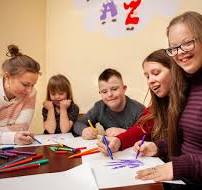
Educating Children with Special Needs Publish Date : 19/12/2025

Educating Children with Special Needs
Professor R. S. Sengar and Other
In a regular classroom, the teacher teaches certain content in a standard way to the entire class because they know that most children are approximately at the same developmental level. Thus, the content of education and teaching style in a regular class are generalised. But this assumption does not hold true for children who have special needs, especially neuro developmental or intellectual disabilities. Their learning abilities and needs are different from neuro typical children of the same age.
Appropriate and Individualised Approach
Special education is one of the most scientific and structured method of instruction which can benefit any person's unique needs and requirements. It caters to children with special needs, whether having a medical diagnosis or behavioural issues. Special education is not about labelling a child, but ensuring each child is provided with the appropriate tools, teaching methods, and environment to thrive academically, socially, and emotionally. Due to neuro plasticity in the young child's developing brain, the early years of life are crucial in shaping cognitive, emotional, and social development. Special education provides early assessment and intervention, which can significantly enhance a child's capacity to integrate into mainstream education, reduce developmental delays, and foster self-esteem.
Special Education benefits children having Specific Learning Disabilities (dyslexia, dyscalculia); Physical disabilities (visual or hearing impairments, cerebral palsy); Intellectual or neuro developmental disorders(intellectual disability, autism spectrum disorder, attention deficit hyperactivity disorder); and Emotional or behavioural difficulties.Special education encourages inclusive classrooms where children of different abilities learn together. This cultivates empathy, reduces stigma, and promotes a more compassionate and understanding society. With proper education, children with special needs can acquire skills for independent living, higher education, and employment. It plays a foundational role in helping these individuals lead productive and dignified lives.
The guiding principles of Special Education are:
Inclusion: Students with disabilities should be educated in the general education classroom to the maximum extent possible.
Individualisation: Educational programmes should be tailored to meet the unique needs of each student.
Least Restrictive Environment (LRE): Students with disabilities should be educated in an environment that is as similar as possible to that of their non-disabled peers.
Parent Involvement: Parents and students should be actively involved in the educational planning and implementation.
The process of special education begins with the decision of what to teach and how to teach. When a child has special needs, it becomes very important to prioritise what is functionally important in a child's life. Not everyone will benefit from learning the alphabet mindlessly. Some children need to learn to dress themselves, understand signages, colours and size and social skills. So assessment and evaluation are critical components of special education. They involve gathering information about a student's strengths, needs, and learning style to inform educational planning. Assessment tools may include formal tests that measure cognitive abilities or academic achievement, systematic observations of student behaviour, as well as past learning.For most children, prerequisites or readiness to learn is an important milestone indicating the beginning of school education.
The markers of readiness to learn include the capacity to give attention, memory, basic communication and the ability to imitate. However, this developmental readiness for school learning can either be delayed or under developed in some children. On a similar note, post classroom learning instruction through special education is then used to help children adapt to the family and social environment. Many children with special needs struggle with 'generalising' to the outside environment, whatever is learned in the classroom.
IEP and its Importance
The Individualised Education Plan (IEP) is central to special education. As the name suggests, it's an individualised plan to cater to the unique needs of every child. If a child has sensory problems, the IEP will focus on targets to increase adaptive behaviour by including sensory breaks. The IEP is specially designed for each child, based on his individual needs and abilities. 'Individualised' means that the education or training programme must be developed to meet the educational and learning needs of a single person rather than a group of persons, using teaching strategies best suited for that person. The education and training are devised on the basis of:
(i) What are the child's needs, and
(ii) what are his abilities.
A child requires services from various other professionals as well, apart from teachers. These specialists are: speech therapist, physiotherapist, occupational therapist, counsellor, medical doctor, psychologist. It is important that the IEP be prepared in consultation with all those who will be involved in providing services to the child. Thus, developing an IEP for a particular child is a team effort. The most important persons in this team are the parents of the child. In this process of planning the child's IEP, the parents are the main contributors and decision-makers.
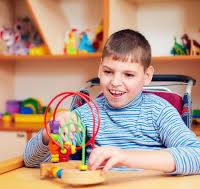
Parents can decide what is the most important activity for their child to learn, and how it could be taught both at home and in school. Suggesting priority activities to the teachers and other professionals, helps them understand what will make life easier and simpler for parents. Parental involvement in training and education of the child is the critical factor which will influence how soon and to what extent the child will learn to carry out various activities.Involvement in developing the IEP will help the parents to understand their child's abilities and will help them to appreciate the efforts made by the child.
The parents will be better able to train the child at home, once they know why it is important to do so and how to do it. Thus, the IEP developed for the child will work best when the parents and professionals come together as equal participants to identify the child's needs, how they will be met and what the expected outcomes may be. Target areas and goals in the IEP are based of assessment; these are achievable, measurable and meticulous records kept on the progress of the child. In some countries, the IEP is considered a legal document.
Strategies for Neuro Developmental Disorders
Strategies in special education vary. These are very different for disabilities where the cognitive capacity is in the normal range. For physical disabilities such as blindness or deafness, instructional strategies are highly specialised with the medium of communication being Braille or sign language. Similarly for the orthopedically challenged, cerebral palsy, the focus is on adapting to the physical environment. However, where children lack the cognitive capacity to pay attention, analyse, comprehend, and, adaptation to environmental stimuli socially, emotionally and behaviourally is affected, the IEP needs to incorporate several targets in every developmental sphere.
Intellectual Disabilities, Autism Spectrum Disorder and Attention Deficit Disorders thus have varied strategies for learning. However, thecommon points which are kept in mind while teaching children with neuro developmental disorders are:
- Functional needs or activities of daily living are prioritised
- Everyday tasks are broken down into smaller, easier and less complicated learning goals
- Teaching is 'concrete' and not focused on abstract matters or ideas
- Multi sensory and experiential learning is the most effective
Teaching Children with Autism Spectrum Disorder
Autism Spectrum Disorder (ASD) is a neuro developmental condition marked by challenges in communication, social reciprocity and social behaviour. In many cases there are cognitive challenges too present as comorbidities. All these lead to behavioural issues due to inability to communicate. Effective early intervention can significantly enhance a child's academic, social, and emotional development. Early intervention is vital because the brain exhibits significant plasticity during early childhood, making it more responsive to therapeutic interventions.
One of the most effective communication strategies for children with ASD is theuse of picture communication. However, since children with autism may lack the motivation and the understanding of the nature of communication, consistent reinforcement and a structured environment can help them adapt better. Therefore for children with autism, communication therapies such Picture Exchange Communication Systems (PECS) are very useful. The PECS has many high technology variants also. Moreover, understanding a child's needs and tailoring responses through adaptive communication has seen to work effectively.For teaching everyday functional behaviour and skills, Applied Behaviour Analysis (ABA) is widely used.
Itisanevidence-based approach that breaks down skills into manageable steps, using positive reinforcement to teach communication, social, and self-help skills. Occupational Therapy (OT) addresses sensory processing issues and fine motor skills, helping autistic children manage sensory sensitivities and develop daily living skills. Sensory integration therapy, for instance, uses structured activities to regulate sensory responses.
Structured Teaching TEACCH (Treatment and Education of Autistic and Communication Handicapped Children), uses visual schedules and structured environments to enhance learning and independence. It is particularly effective as autistic children perform very well when the environment and schedules are structured. All teaching needs to be systematic, consistent and in tune with the child's needs, strengths and interests.
Teaching Children with Attention Deficit and Hyperactivity Disorder (ADHD)
ADHD is characterised by symptoms of inattention, hyperactivity, impulsivity, and emotional dysregulation that are excessive and pervasive, impairing in multiple contexts, and developmentally Inappropriate. ADHD symptoms arise from the prefrontal cortex. While ADHD involves a lack of sustained attention to tasks, inhibitory deficits also can lead to difficulty interrupting an already ongoing response pattern, due to which children may persevere in actions despite a change in context.Behavioural Therapies are very effective for children having ADHD. These interventions teach children with ADHD self-regulation and organisational skills. Techniques include positive reinforcement, token systems, and structured routines to manage impulsivityand inattention. Cognitive Behaviour Therapy (CBT) helps develop coping mechanisms for managing attention and impulsivity, although it is used in slightly older children.
Environmental modifications- creating structured, distraction-free environments at home and in preschools helps children with ADHD to focus. Tools like visual timers and task checklists support task completion. Preschool programmes with small group settings and individualised attention can prepare children with ADHD for formal schooling by fostering social and academic skills.
Teaching Children with Intellectual Disability
Intellectual disability is a condition that limits intelligence and disrupts abilities necessary for living independently. Signs of this lifelong condition appear during childhood. Most people with this will need some degree of assistance throughout their lives. Support programmes and educational offerings can help with managing symptoms and effects. The symptoms of intellectual disability revolve around difficulties in different skill sets, including academic skills, social skills and domestic skills. Intellectual disability affects reasoning and critical thinking, as well as adaptive behaviours such as taking self-care, personal hygiene, and the ability to carry out everyday chores. Special education strategies for mental retardation focus on individualised instruction, breaking down complex tasks into smaller units and utilising visual aids and hands-on learning to promote skill development and independence. These strategies emphasise clear communication, positive reinforcement, and creating an inclusive and supportive learning environment with active, tactile, and responsive learning experiences. Special curriculum includes teaching essential life skills such as dressing, eating, using public transportation. Opportunities for social interaction are facilitated and social skills taught through role-playing and group activities.
Assistive Technology
Assistive technology (AT) plays a vital role in supporting children with developmental disability, retardation and autism, helping them learn, communicate, and participate more fully in daily life. Cognitive tools help with memory, attention, and problem-solving. Examples include memory aids, schedules, routine planners built in devices such as Alexa and Siri. Speech-generating devices allow children to communicate their needs and thoughts. Adaptive clotheswith Velcro, adaptive pens, copies can make writing easier.
Assistive technology can also improve a child's ability to move around and manage daily tasks. For children with sensory sensitivities, AT can help regulate their environment, such as noise-cancelling headphones reduce distracting sounds. Weighted blankets and vests provide calming deep pressure. Augmentative and Alternative Communication (AAC) devices are crucial for children with limited or no verbal speech. Virtual reality devices provide a safe and controlled environment to practice social skills.
As the quote from the Ramayana states: 'Nothing is unattainable for an enthusiastic person in this world.' (Ramayana, Kishkindha kanda, sarga 1, shloka 121)
Special education in India faces a multi-faceted set of challenges, with the most significant being the delay in diagnosis. This critical period is often lost due to a lack of awareness, parental denial, and reliance on unscientific remedies, which prevents timely intervention. Lack of resources such as trained special educators, learning materials, and assistive technologies especially in remote areas is another big challenge. Furthermore, physical barriers like inadequate transportation facilities and pervasive social issues such as negative attitudes and stigma create environments of exclusion and discrimination.
Despite these obstacles, significant strides have been made, largely due to government initiatives like the SarvaShikshaAbhiyan (SSA), now part of the SamagraShikshaAbhiyan. It focuses on inclusive education for all children, including those with special needs. SSA provides resources and support to ensure children with special needs have access to quality elementary education alongside their peers. This includes provisions for assistive devices, teacher training and resource support. SSA promotes the inclusion of children with special needs in regular schools, ensuring they have the same learning opportunities as other children. SSA encourages community participation and involvement in the education of children with special needs.
Special education has developed to incorporate better learning strategies facilitated by modern equipments and experienced educators. The advances have led to inclusive and exclusive teaching strategies that are aimed at creating the least restrictive environments for learners with disabilities. Furthermore, special education entails the rights to ensure children with disabilities receive education without imposing high costs on their parents.

Writer: Professor R. S. Sengar, Director Training and Placement, Sardar Vallabhbhai Patel University of Agriculture and Technology, Modipuram, Meerut.


